Case study · Digital product · Health & nutrition
NutriDia AI: from idea to a 14-day nutrition experience.
A product, UX and growth case study: turning improvised meals into an understandable structure, with AI support and professional judgement.
- My role
- Co-founder · Product, growth and automation
- Period
- 2025 – 2026
- Status
- B2C paused · User-tested MVP
01Challenge
Less improvisation. More understanding.
The challenge was to help people move from deciding every meal on the fly to indicative, personalised structure. The design needed to support understanding and adherence without turning AI into an autonomous source of individual clinical advice.
02My role
Connecting product, business and execution.
As co-founder, I worked from product definition through its technical evolution as an MVP, coordinating the digital experience with a nutritionist’s review.
- Product definition and UX
- Go-to-market, pricing and value proposition
- Landing pages and Meta / Google paid media
- CRM and automations
- Nutritionist coordination and technical MVP evolution
03What we built
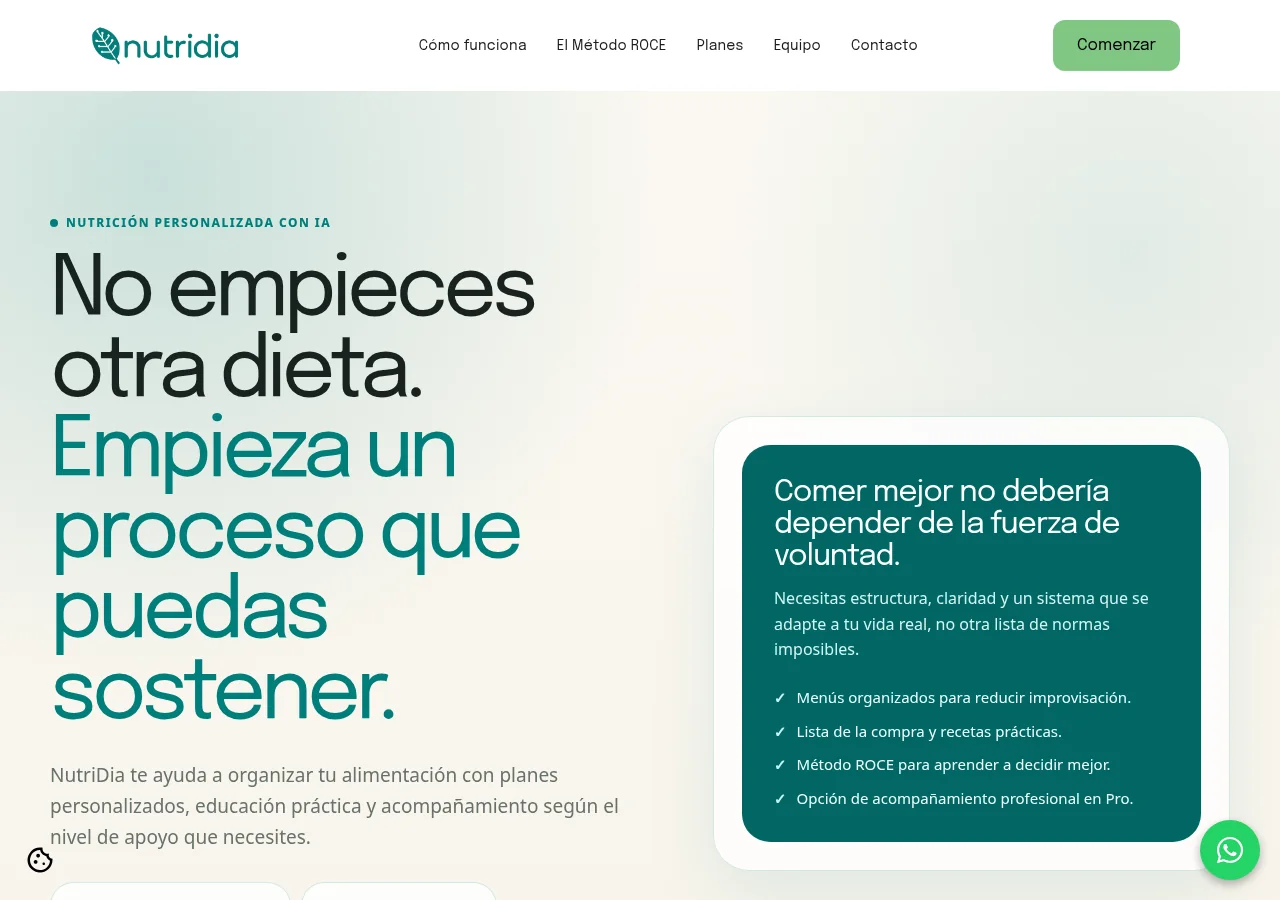
A PWA connecting screens and processes.
Using Lovable, we developed a functional PWA with planning, organisation and follow-up modules. The MVP was tested with users; this product milestone does not imply successful commercial adoption or proven clinical outcomes.
NutriDia AI · PWA
14 days
Planning cycle
AI does not replace a nutritionist. It prepares structured drafts; professional review and approval precede plan publication.
4–5 meals a day
Plan and recipes
14-day cycles, 4–5 meals, recipes and substitutions for indicative, personalised structure.
Shopping and organisation
A shopping list connected to the plan to bring planning into everyday life.
Progress and adherence
Progress, adherence, feelings and weekly check-ins; movement as part of the experience.
Review and publication
User and professional/admin interfaces for reviewing, approving and publishing plans.
04Architecture / stack
Automate preparation. Preserve professional judgement.
Lovable for the PWA; Webflow for the landing page; Typeform for intake; Make for orchestration; MailerLite for email and CRM; Meta and Google Ads for acquisition. AI supported structured draft preparation, always before professional review and approval.
From acquisition to follow-up.
- 01
Landing and acquisition
- 02
Registration and questionnaire
- 03
AI preparation
- 04
Professional review / approval
- 05
Published plan · 14 days
- 06
Follow-up
AI does not replace a nutritionist. It prepares structured drafts; professional review and approval precede plan publication.
05Growth and validation
Test the whole journey, not just attract attention.
We worked on value proposition, pricing, landing pages, campaigns and CRM communications to explore the journey from acquisition to product use. The milestones I can share are a functional PWA and a designed and tested automated workflow. The project remains in validation; I do not publish ambiguous lead counts or claim unverified sales, ROAS or clinical results.
06Lessons learned
Attention does not equal sales.
Registrations or attention alone do not validate a commercial operation. Value proposition, pricing clarity and conversion need as much attention as the product. Professional review belongs in the architecture, not in a footnote at the end.
07Project status
Product built. B2C commercially paused.
NutriDia AI was developed in 2025–2026 and its MVP was tested with users. B2C commercial activity has been paused since October 2026. The project is maintained, with future exploration of Care B2B and Intelligence; these are directions for exploration, not deployed services.
Meeting · Consulting · Opportunities